
You need better content.
If you’re a savvy communications strategist or a whiz-bang writer who knows the value of good content, then you already know everything I’m about to say.
This is for everyone else.
 During the 2014 election cycle, I watched in frustration as far too many campaigns didn’t make their case as well as they might. They didn’t let the candidate’s true principles and personality show through. It was hidden behind carefully crafted talking points that were message-tested within an inch of their lives.
Too many candidates couched their positions in what they thought voters wanted to hear, instead of saying what they really believed.
Too many candidates focused on what they were against instead of running on what they stood for. Opposition messaging is part of the game in politics, but it shouldn’t be the whole ballgame. So we never really got to know who some of these men and women were. We only knew that they wanted you to vote against their opponents.
Who got it right? Senator Al Franken of Minnesota leaps to mind. So does Senator-elect Gary Peters of Michigan. Both of these winning campaigns illuminated the candidates’ humanity, a word used by Sen. Franken’s digital director, my friend Sara Cederberg, to describe what’s at the heart of good messaging. I could not agree more.
 For example, Sen. Franken was frequently shown with his wife, Franni, telling stories of their life and work together. This photo of Al, Franni and their first grandson, Joseph, is at the top of the “Meet Al” page of the campaign website. The campaign gets bonus points for putting a button on every blog post that says “I care about this,” so supporters could instantly share content that reinforced their own values. The tone was consistently warm, friendly and fun where appropriate, yet serious when it needed to be. The campaign team found just the right balance.
In one of the best TV ads of the campaign cycle, Sen.-elect Peters showed off his favorite raggedy sweatshirt and worn-out shoes while his family teased him about being frugal. It was an entertaining spot that helped him drive home his message about careful spending. See for yourself.
When I was volunteering by making phone calls to voters in Michigan, one woman said, “Tell Gary Peters I just love that ad with the shoes! He should make more like that.” A refreshing change from the majority of comments I heard about people being sick of negative campaign ads.
That’s not to say that these candidates didn’t go on the offensive. Although their emphasis was on what they were fighting for, they talked about what they were fighting against. But they did it with solid facts about policy, not personal attacks.
What’s true for campaigns is just as true for any endeavor that requires persuasion. People want to feel an affinity for your candidate, your cause, your product. One of the very best ways to do that is through storytelling. Both campaigns did this extremely well.
Start with a clear mission statement and brand identity, which applies to both people and products. Then tell the story of the brand and make your mission clear. Everything else — social media, emails, videos, speeches, media interviews — builds on that. Keep the messaging disciplined and stay on point, absolutely. But never forget there’s a personality behind the brand, especially if there’s a person involved.
 Sure, you need to know your audience. Factor in all the data and demographics that can help you tailor the message and target the right people. But your brand’s message comes first, always.
And don’t forget the details. Quality content matters, whether you’re writing a speech, a blog post, an ad or a tweet. Be consistent, be authentic and be accurate. We can all make mistakes, but spelling and grammar still count — especially when you want to persuade someone that you’re the best person for the job.
Most of all, be human. Let your brand’s humanity shine through. Interact with your audience on a personal level. Because in the end, if you’re going to win you need people to choose you, whether you’re a politician or a product. Give them something they can relate to. Make them like you enough to say “yes.”
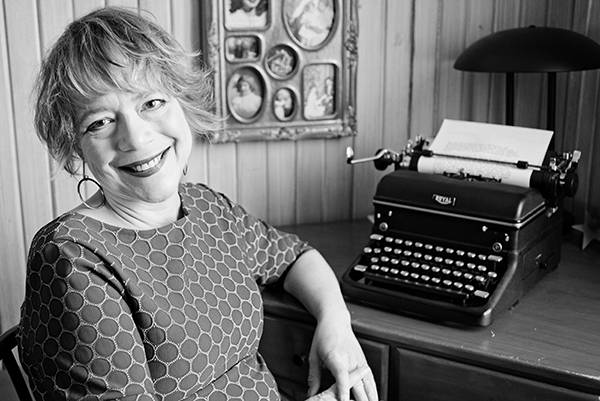
[Typewriter photos by Steven Depolo (top) and Leo Reynolds (bottom).]
There’s nothing like a trip to the emergency room to drive home the importance of being your own healthcare advocate.
My work as a writer revolves around helping consumers engage in their own healthcare, from buying insurance to navigating the healthcare system to living well. As a woman living with diabetes, I’m also an advocate for my own good health. I practice what I preach.
 But a recent visit to the ER was a powerful reminder that we must always be vigilant about our own healthcare. Should we trust the medical experts? Absolutely. And as patients, we’re experts about ourselves — or should be — and have a responsibility to be engaged in healthcare decision-making.
I was treated at one of the country’s best hospitals, after having symptoms of what could be a heart attack: pounding heart, nausea, sweating and dizziness.
The hospital ran tests and kept me for 15 hours to monitor my heart. As it turns out, my heart is perfect. The culprit? Dehydration — probably caused by the overly long walk I’d taken earlier in the day and a diuretic I’d been prescribed — and a mild urinary tract infection.
All’s well that ends well. However, I was reminded that you can never take things for granted. The woman in the next bed told me I was “breaking new ground” by asking a lot of questions. Asking questions shouldn’t be innovative. It should be routine — but it isn’t, because many people just don’t know they can and should do it.
I was writing this post in my head while I was still in the ER, thinking that my experience might help educate others. Here are a few tips.
If you have a chronic health condition, always carry your medications with you.
I’m glad I had the presence of mind to bring my insulin with me. The hospital wanted to adjust my regimen to their convenience, but I insisted they let me stick to what’s been proven to work. To their credit, they listened.
Always carry a list of current medications, including vitamins and supplements.
Apparently this is not the norm. When I told the cardiologist that I had a list of current meds in my purse, she looked genuinely surprised. I can’t remember the exact medication names and dosages, so being able to hand medical staff that information reduces the chance of mistakes. Heaven forbid I’d been unconscious, they would have found the list, along with other health information and emergency phone numbers, in my purse. They’d know to look because I wear a medical alert bracelet.
Know your medical history — and share it.
My symptoms mirrored those of a heart attack in women, so I told the staff I have a family history of heart disease, and a personal history of high blood pressure and diabetes. Maybe they would have asked me, but it never hurts to be proactive. In retrospect, I’m going to add key family history facts to the sheet I carry with information on my medications and health conditions, including allergies. I also learned that in an emergency, it isn’t always easy to know what to tell the medical team. It took me an hour to realize I should have told them I’d been nauseous on and off for a few days. In a medical situation, there’s no such thing as too much information.
Don’t be afraid to say “no” when appropriate.
I have food allergies and eat a very specific diet that keeps my diabetes in good control. The “diabetic” and “heart-healthy” menu options at the hospital didn’t give me much to choose from. I had to explain my dietary needs multiple times to the nurses, nutritionists and food service staff. Finally, they okayed my food request: fresh fruit and a hard-boiled egg. (I stopped short of saying that one hard-boiled egg was not going to give me a heart attack.) Again, the hospital finally listened but it wasn’t to anyone’s benefit to make it so difficult.
Ask the staff to explain things you don’t understand.
As I started feeling better, the staff repeatedly told me it was a good sign that I was no longer “diaphoretic.” I write about healthcare and I even had to look up the word. Why didn’t they just say “sweating heavily”? When health professionals don’t put things in plain English, insist on explanations.
Question anything that just doesn’t seem right.
At the end of my stay, the hospital tried to send me home with someone else’s discharge instructions. I figured it out because the nurse said I should keep taking a medication I know is for a thyroid condition I don’t have. When I said so, she replied, “Oh, there are lots of different names for medications.” I told her I did not take any thyroid medications. That’s when she realized she had the wrong Smith. She was profusely apologetic, but if I hadn’t known better I would have gone home not knowing how to take my antibiotic or make the other adjustments recommended to prevent another episode of dehydration.
 I give the hospital kudos for providing detailed discharge instructions once I got the right ones. They called the next day to make sure I carried through on my follow-up care. And when I asked questions or advocated for myself, they listened to me — the patient. Overall, I got great care.
But I can’t help but wonder: What would have happened if I hadn’t asked questions? What if I hadn’t known how to provide the information they needed or ask the questions that kept me safe? What if I were someone who simply trusted them to do whatever they felt was best, even though they’d never set eyes on me before?
Ultimately, I probably would have been fine. The hospital staff knew what they were doing. They would still have given me the right prescription for my antibiotics and my personal doctor would have caught the discharge order mix-up. I would have gotten back on track with my insulin regimen and eating plan, probably without more than a hiccup. But maybe not. There’s really no way to know.
But I do know this: I’m grateful I knew how to speak up for myself, how to ask the right kinds of questions about the care I was receiving, what the test results were showing and what their plan of action was.
Healthcare staff should be offering this information in easy-to-understand terms, but the fact is that some are better at it than others.
One of my current doctors is learning to be better at communicating with me because I have forced the issue. Maybe some of his other patients are, too. As patients, we all have a responsibility to be educated health consumers, to know what’s good for us and question what isn’t — and to ask about what we don’t know.
It only makes sense to take charge. After all, it’s our own health that’s at stake.
Want to educate yourself on being your own healthcare advocate and make informed decisions? The Choosing Wisely initiative is a great place to start.
[Photo credits: Top – Tim Evanson; Bottom – Andy Smith.]
After having time to reflect on everything I saw and learned at TEDMED 2014, I keep coming back to an idea that was planted in my brain during the conference: Your personal perspective is going to shape what you take away from TEDMED.
 Maybe that seems obvious. I’d certainly be curious to hear what other delegates think. But in the work I do around healthcare, my primary focus is people — helping them be more engaged in their own care through education and activism. And the theme that kept resonating for me at TEDMED, over and over, was humanity.
Of course, I was impressed by the high-tech solutions and innovations I learned about. When it comes to enhancing the healthcare experience for people, the possibilities are limitless. But technology will only get you so far. True innovation still requires a human touch — improving the way physicians and patients interact with each other, finding strategies that truly center care around patients and their loved ones.
I was constantly reminded of how exploring our own humanity can open the doors of possibility and improve the way we approach healthcare.
There was Danielle Ofri, an attending physician at Bellevue Hospital, who bravely shared her personal story of unintentionally endangering a patient’s life as a way to underscore the vital importance of reducing preventable medical errors. The way to do that, she said, is to create an environment where physicians are encouraged to admit their vulnerability and humility, to say “I don’t know.” Because if care providers never admit their uncertainty or their mistakes, how can the profession ever develop ways to reduce those errors?
Elizabeth Nabel, the President of Brigham and Women’s Hospital, talked about humility, too, and emphasizing the need to ask “What if?” and admit what we don’t know in order to drive change and improvements in our healthcare system.
Not everyone on the TEDMED stage was a healthcare professional. One of the talks that resonated with me the most was 16-year-old Rosie King, who spoke about her own autism and how she sees it as an opportunity to lead an imaginative life instead of one in which she is identified by a label. She reminded us that we must put the person first.
 Time and time again, speakers underscored the vital need to recognize the humanity in healthcare — as did the people I spoke with between sessions, like Mark Hyman, who advocates personalized care through Functional Medicine.
Kitra Cahana, a photographer who documented her father’s determination to regain his abilities after a debilitating stroke, a powerful testament to the strength of the human spirit.
Elizabeth Kenny, who shared her horrifying personal experience with anti-depressants, which made her much sicker than any disease did. “This talk is only 12 minutes long,” she said. “Most patients don’t get to spend 12 minutes with their primary care physician.”
Leana Wen, an emergency medicine physician whose “Who’s My Doctor” initiative is encouraging complete transparency from doctors so patients can make informed decisions about who will be caring for them. Her idea of radical transparency isn’t exactly popular with some doctors, but it puts the power of decision-making in patients’ hands.
Julian Treasure, Mariana Figueiro and Robin Guenther, who spoke about the impact of sound, light and environment on the patient experience and, in particular, healing. It’s been said that hospitals are the worst place to get rest and recover, because of all the noise and light, not to mention the toxic materials and chemicals that are still used too often. These experts are working to create care environments that promote better health.
There was so much more, and you can read some of my initial thoughts in a Storify I created right after the conference.
But on reflection, my initial gut response to TEDMED 2014 has proven correct.
As #TEDMED concludes, my first gut-response takeaway: Think big, work small — at the level of the human experience.
— Amy Lynn Smith (@alswrite) September 12, 2014
Because TEDMED is all about sparking our imaginations and drawing conclusions that lead to new ideas, I can’t help thinking about a production of Stephen Sondheim and James Lapine’s Sunday in the Park with George that I saw a few days after TEDMED.
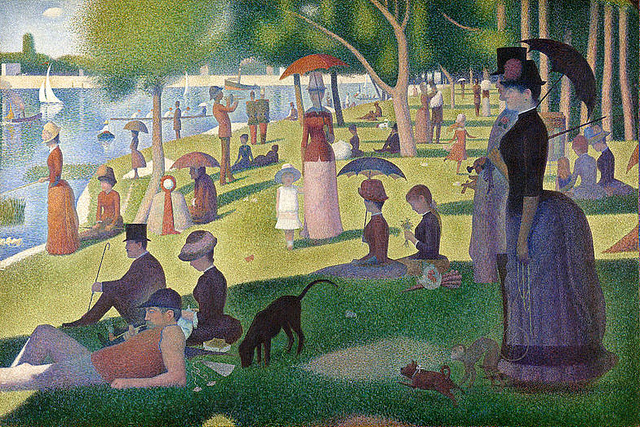 This imagined story behind Georges Seurat’s painting, “A Sunday Afternoon on the Island of La Grande Jatte,” is all about connecting the dots, about finding the humanity in whatever passion drives us, about not being so caught up in the work that we forget to experience life all around us.
Our work is a collection of everything we’ve experienced — of everything that matters to us at the human level. I know that my TEDMED 2014 experience was shaped by the issues that matter most to me.
Although there’s a lot we don’t know about Georges Seurat, there’s no question he saw the world in a singular, innovative way.
We all have the power to shape the world with our own unique view. So as I move forward from TEDMED, I’m left with a new appreciation for the closing line of Sunday in the Park with George, written to describe Seurat:
“White. A blank page or canvas. His favorite. So many possibilities.”
.
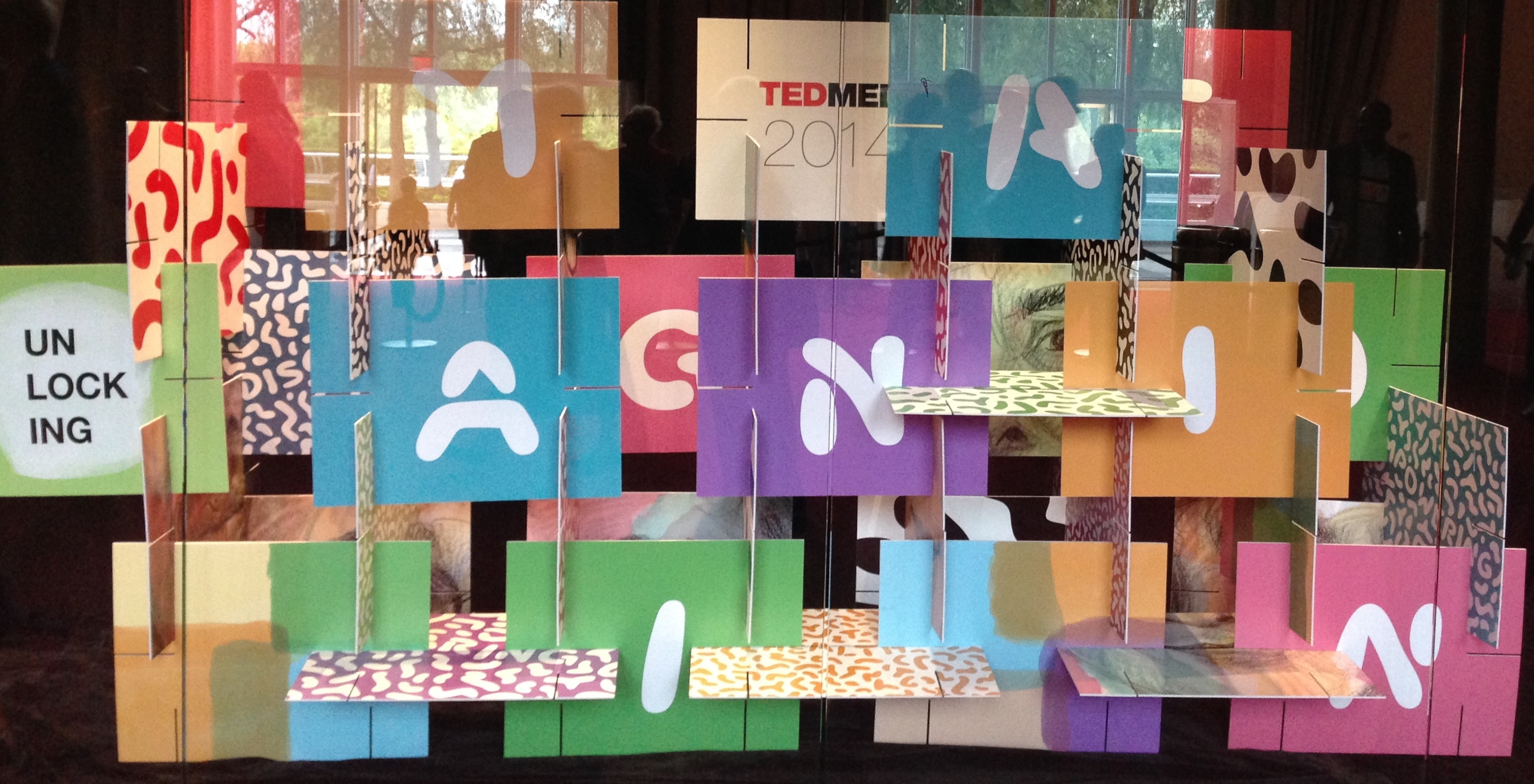
[Photo credits, top to bottom: TEDMED theatre entrance in DC by Amy Lynn Smith; selfie with Dr. Mark Hyman; Seurat painting photo by Plum Leaves via Flickr.]


